
AVERAGE STAGING COSTS vs ADDED PROPERTY VALUE - UK MARKET ANALYSIS
According to the latest ONS data, the average monthly rent in London stands at £2,273, up from £2,235 a year earlier representing annual rental growth of 1.7%. For sellers, with Zoopla's latest figures showing house price growth at just 1.3% year on year, the mathematics around property presentation has shifted. When annual appreciation barely covers inflation, sellers and landlords can't rely on market momentum alone they need competitive advantages that drive results within weeks, not years.
For sellers and landlords evaluating home staging cost in 2026, the question reduces to commercial logic: does the investment deliver measurable returns through compressed sales cycles, improved pricing outcomes, or reduced vacancy periods that justify the capital allocation? At BoxNine7, we work with developers managing multi unit launches, landlords optimising portfolio yield, and individual sellers navigating competitive local markets. Each scenario requires different staging approaches and investment levels. Let's examine how staging costs map to market positioning and what that means for property.

Properties rarely sell in isolation they compete within similar locations, price ranges, and specifications. Buyers typically shortlist several options, and the homes that sell fastest are not always the cheapest or largest, but the ones positioned most effectively within their market segment.
Online engagement and presentation play a major role in that positioning. Professionally staged and well photographed properties attract more clicks, create stronger first impressions, and compare more favourably during viewings. For homes priced at the top of the local market, strong presentation also helps justify the valuation and build buyer confidence.
MARKET POSITIONING THROUGH PRESENTATION QUALITY
BREAKING DOWN STAGING COST COMPONENTS
Understanding what drives staging investment helps calibrate spending appropriately. The cost of staging a house in London comprises several distinct elements, each contributing differently to final presentation.
Consultation and strategy development: Property assessment, market analysis, buyer profiling, and competitive positioning determine which rooms are staged and how the property stands out. These early strategic decisions shape the overall staging approach and costs.
Furniture sourcing and specification: Furniture quality should match the property’s value and buyer expectations. Higher value homes require premium furnishings to support their market positioning.
Logistics and installation coordination: Staging involves transportation, installation teams, and coordination with estate agents and photographers. Location, accessibility, and property type can influence logistics and overall costs.
Styling depth and finishing quality: Basic staging focuses on furniture placement, while comprehensive staging adds textiles, artwork, lighting, and accessories to enhance visual appeal and buyer response.
Duration and flexibility requirements: Standard staging rental periods typically range from 8–12 weeks. Properties requiring longer staging may involve adjusted cost structures and extension considerations.

VACANT PROPERTY STAGING ECONOMICS
Empty properties face particular presentation challenges. Without furniture, rooms appear smaller, purposes become unclear, and buyers struggle to assess spatial relationships. The staging cost for vacant properties runs higher than occupied alternatives, but the impact justifies different economics.
High quality staging photography drives more viewing requests
Staging clearly demonstrates room functionality for buyers
Staged spaces create stronger emotional buyer connection
Professional presentation helps justify premium property pricing
For home staging London properties where competition runs intense and buyer expectations run high, vacant staging investment often represents the difference between achieving asking price and settling for reduced offers.

LANDLORD STAGING CALCULATIONS DIFFER FROM SELLER SCENARIOS
Rental property staging operates under different financial logic than sale staging. The metrics shift from sale price impact to yield optimisation and vacancy reduction.
Void period costs compound quickly: Every week a rental property sits empty represents lost income. At £2,273 average monthly rent, each vacant week costs £524. Four weeks of void period equals £2,096 in lost income that staging investment might prevent.
Tenant quality reflects presentation: Well staged properties attract reliable tenants and encourage longer tenancies.
Presentation influences rental pricing: Strong presentation helps properties achieve higher rents in competitive markets.
Consistent staging strengthens portfolios: Standardised presentation improves branding and marketing across multiple properties.
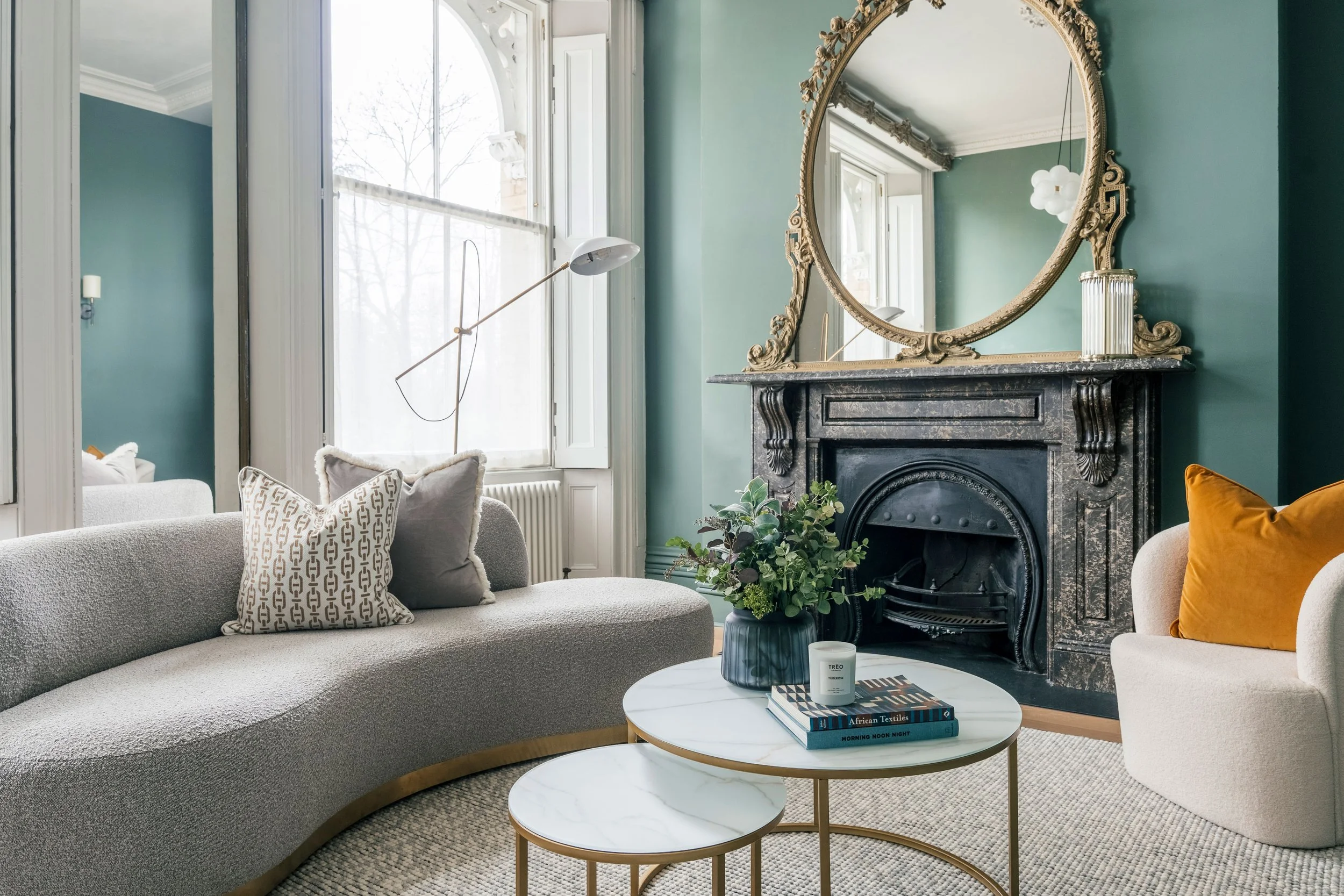
COMPARING STAGING INVESTMENT TO ALTERNATIVE EXPENDITURE
Staging costs don't exist in isolation. Sellers and landlords face multiple property improvement options. Understanding how staging compares to alternatives clarifies investment priorities.
Staging vs kitchen updates: Kitchen renovations cost £8,000–£25,000, while staging is cheaper and improves presentation quickly.
Staging vs bathroom renovations: Renovation helps if bathrooms are outdated; staging highlights strengths if they are functional.
Staging vs price reductions: Price cuts permanently reduce value, while staging is a one time investment.
Staging vs extended marketing: Unstaged homes take longer to sell, increasing ongoing carrying costs.
WHAT DETERMINES APPROPRIATE STAGING INVESTMENT LEVELS
The appropriate investment in staging interior design depends on several key factors, and understanding these helps align the level of effort with the potential return.
Property value plays an important role, as higher-value homes typically require a more refined and cohesive presentation to meet buyer expectations, while lower-value properties can achieve strong results with simpler enhancements.
Local market conditions also matter. In faster-moving markets, lighter staging is often sufficient because demand is already high, whereas in slower markets, a more considered and impactful presentation can help a property stand out and attract attention.
The existing condition of the property is another major factor. Well-maintained homes usually benefit from minimal styling to enhance what’s already there, while properties that feel dated or worn may need improvements before staging can be fully effective.
Competition in the local area should also be considered. Where there are many similar listings, stronger staging helps differentiate the property and create a memorable impression for buyers.
Finally, the seller’s timeline influences the approach. If a quicker sale is a priority, investing more effort into presentation can help reduce time on the market and improve overall buyer interest.
MEASURING COST AGAINST OUTCOME METRICS
Evaluating whether staging delivered appropriate returns requires tracking specific outcomes against investment costs.
✓ Faster sale compared with similar local properties
✓ Final sale price achieved close to asking price
✓ Fewer negotiation requests from buyers
✓ Higher viewing to offer conversion rate


STRATEGIC STAGING DECISIONS FOR DIFFERENT PROPERTY TYPES
Different property types benefit from different staging approaches and investment levels. Understanding these distinctions helps allocate budgets appropriately.
Apartments in competitive developments: When selling or letting identical units in the same building, staging provides the only meaningful differentiation. Investment here delivers maximum competitive advantage since location, size, and specification remain constant.
Period properties with character features: Victorian and Edwardian properties benefit from staging that highlights original features while demonstrating modern liveability. The investment balances heritage appreciation with contemporary functionality.
New build properties requiring warmth: New developments often feel clinical and cold empty. Staging creates the warmth and personality that helps buyers envision these as homes rather than construction projects.
Family homes in suburban markets: Larger family homes benefit from home staging that demonstrates flexible space usage home offices, playrooms, guest accommodation. The investment shows functionality beyond basic bedroom and living room configurations.
THE MARKET POSITIONING CALCULATION
Professional staging represents market positioning investment. The cost gets evaluated against competitive advantage created and transaction outcomes achieved. As an Experienced Home Staging Company, We Boxnine7 calculate staging recommendations based on property specific factors: current market conditions in your area, comparable property performance, typical time on market, and whether you're selling or letting. Sometimes comprehensive staging delivers clear competitive advantage. Sometimes targeted staging of key spaces suffices. Occasionally, in exceptionally strong markets, minimal intervention works.
The average home staging costs UK question resolves into specific analysis: for your property, in your market, with your timeline, does professional presentation generate returns exceeding the investment? Answer that question honestly, and the staging decision becomes clearer.